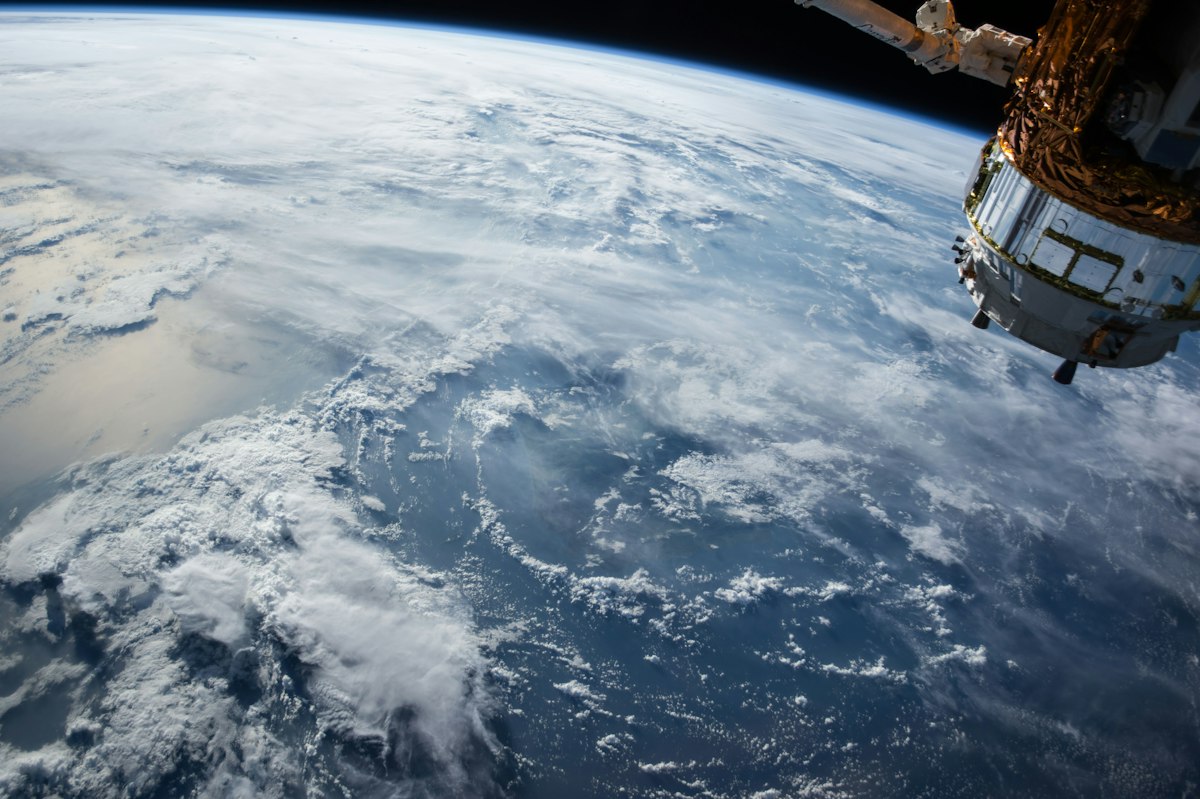
A Deep-Blue World 63 Light-Years Away Looks Like Earth — But Rains Glass at 5,400 mph
HD 189733b glows a familiar cobalt from afar. Up close it is one of the most hostile environments ever catalogued: 2,000°F heat, silicate precipitation, and hypersonic winds that never stop screaming.
Point the right spectrograph at HD 189733b and the light that returns is a deep cobalt blue — the same blue you know from Earth's oceans seen from orbit. The resemblance is purely cosmetic, and one of the universe's crueller jokes.
The blue is not water. It is silicate — window glass — condensed from the atmosphere under extreme pressure and swept sideways at 5,400 miles per hour by wind systems that circle the planet without pause.
Astronomers first confirmed the colour through polarimetry in 2013 at La Silla Observatory. The finding was immediately arresting: here was a planet that looked, through a telescope, like it belonged in our own solar system.
JWST follow-up observations have since built a portrait of a world at the extreme edge of planetary physics — its atmosphere a soup of sodium, potassium, and vaporised iron, with carbon monoxide detected at wind speeds never recorded anywhere else.

The Weekly Dispatch — Free in Your Inbox
Every time a new article publishes on Event Horizon, you'll get it straight to your inbox — no noise, no spam. Join thousands of curious readers.